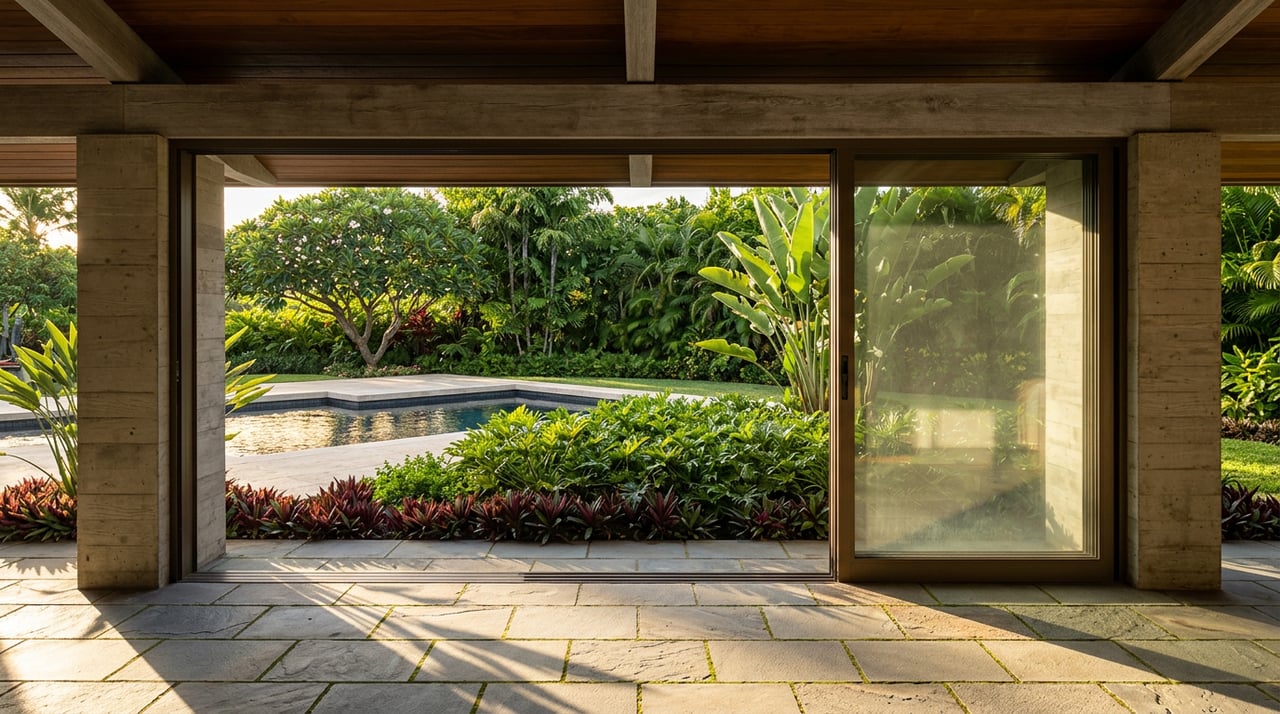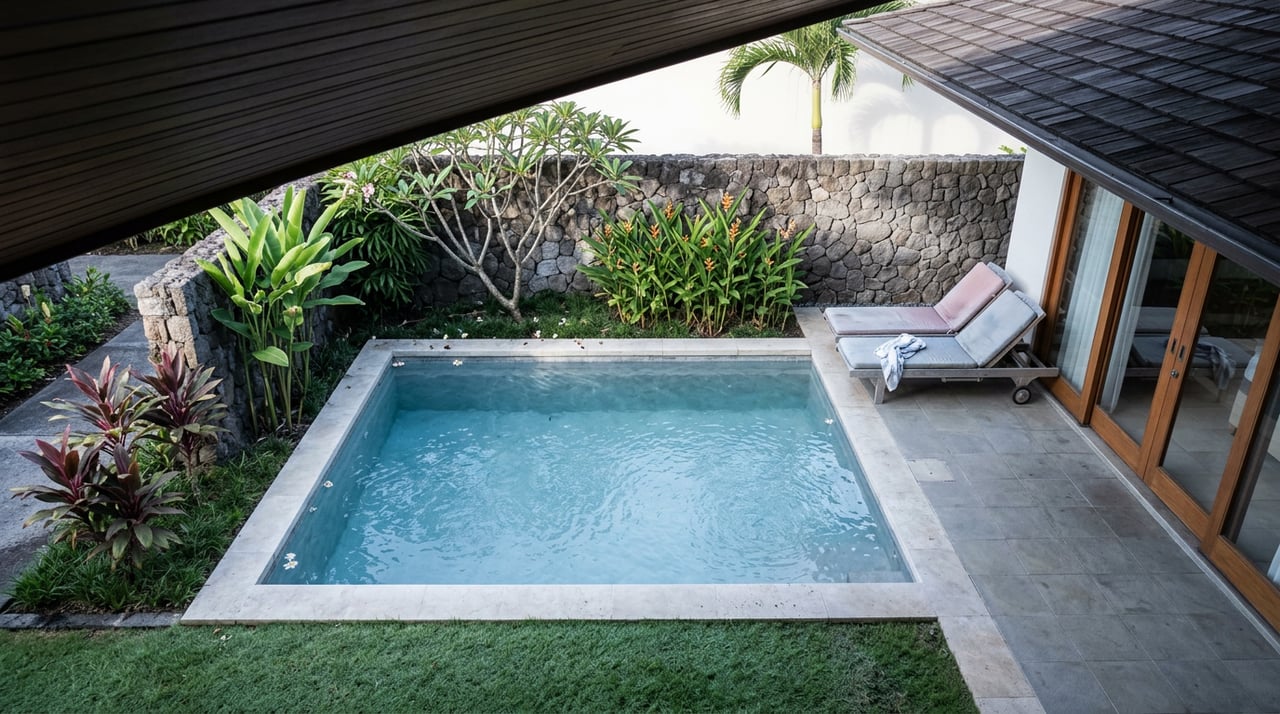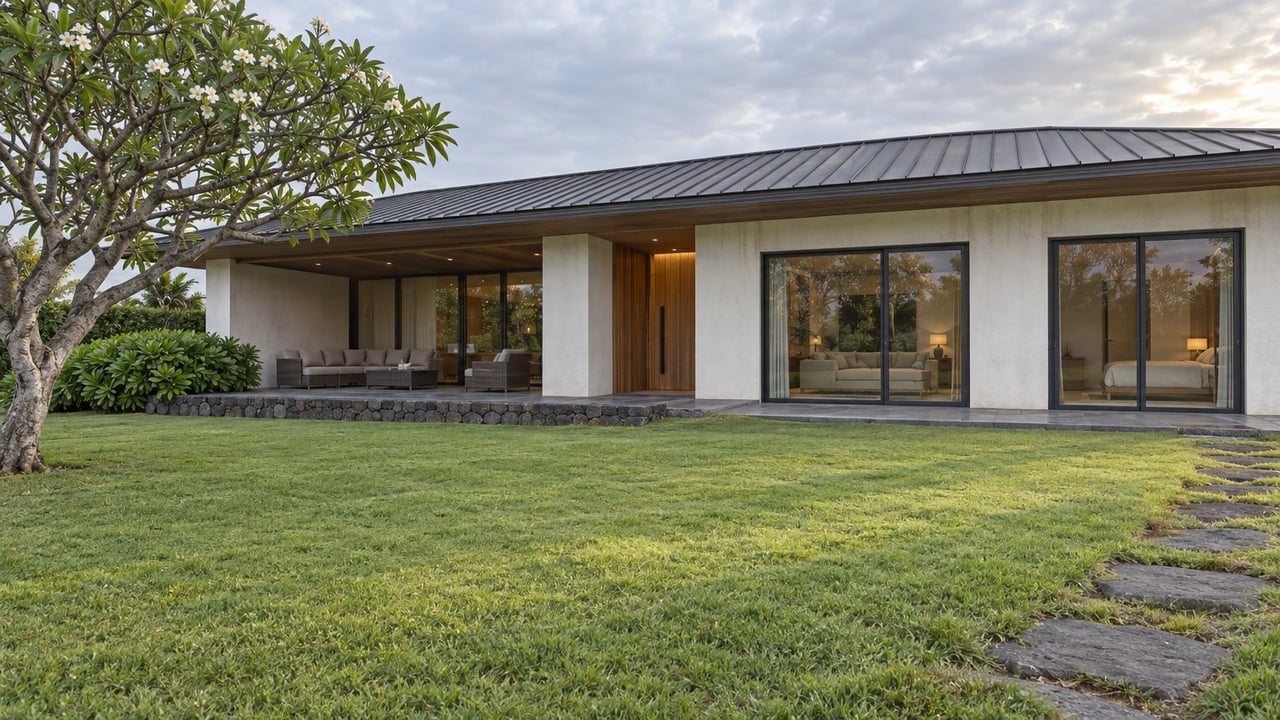
Two lots go up for sale within the same month at Poipu Beach Estates. Both sit inside the same 106-lot subdivision between Koloa Landing Resort and Kiahuna Golf Course. Both carry the same zoning, the same Visitor Destination Area status, the same walk to the Shops at Kukui'ula. One measures just under an acre. The other measures just over. A buyer comparing them on price per square foot would treat that difference as rounding error.
It isn't. The parcel that clears one acre can be split into two separately deeded properties. The one that doesn't, can't. That single line, drawn by the subdivision's homeowners association and backed by county zoning, is the most consequential number in the neighborhood, and it rarely shows up in a listing's headline.
What the ADU Rules Actually Say
Poipu Beach Estates holds a distinction none of the other neighborhoods clustered around Poipu Beach can claim: it is the only subdivision in the resort core where a homeowner can build a second dwelling on the same lot as the main house. Kiahuna Golf Village, Kukui'ula, and the older Poipu condo complexes don't offer this. Poipu Beach Estates does, but the terms of that permission change sharply depending on lot size.
Under one acre, the county allows a main home plus an 800 square foot additional dwelling unit, subject to county concurrence. At one acre and above, the allowance nearly doubles to 1,800 square feet, and owners gain something the smaller lots don't: the right to use Hawaii's condominium property regime process to divide the parcel into two separately titled units, each with its own deed, its own mortgage, and its own tax bill.
A condominium property regime, or CPR, is normally associated with high-rise buildings and shared hallways. In Hawaii it also applies to raw land and single-family subdivisions, letting an owner split one lot into legally distinct units without going through a formal county subdivision. Kauai County's planning department administers the paperwork on the government side, and the state's real estate commission requires a developer's public report before any CPR unit can be sold to a buyer, a process spelled out in the state's own guidance on condominium formation.
The Line Shows Up in Real Listings
This isn't a theoretical distinction. It shows up in how properties are actually marketed inside the subdivision. Listings on parcels at or near an acre routinely flag the CPR option directly in the remarks, phrases like "possible to CPR into 2 lots" attached to level, one-acre sites with underground utilities already in place. Listings on smaller, sub-acre lots describe the same 800 square foot ADU allowance but never mention subdivision, because the option isn't there to mention.
One property on Makalea Street shows what happens when an owner actually uses the mechanism. The original parcel was split into two CPR units: a three-quarter-acre unit holding the main home, and an adjacent quarter-acre unit left as a separate, sellable, buildable lot. Buy both units together and the listing math works out to a full acre reassembled, plus a second building envelope, plus the flexibility to sell the vacant unit off later without touching the house. That flexibility exists because the underlying parcel cleared one acre before it was ever divided. A three-quarter-acre lot on its own, purchased without that history, would not have qualified for the same split.
Lot 186, described in another listing as sitting at just over an acre, gets the same treatment: a main residence plus the larger ADU allowance, with the acreage doing the legal work. Compare that to a build-ready 13,000 square foot lot elsewhere in the subdivision, comfortably under an acre, where the same marketing language about a second dwelling appears but the CPR language never does.
Why the Threshold Outweighs the Price Tag
For a buyer treating Poipu Beach Estates as an investment property or a multi-generational compound, this changes the math on what a given price actually buys. A vacant, build-ready lot in the subdivision has listed in the $300,000 to $400,000 range depending on size and location. A completed home on Makalea Street, built with the main house and a studio ADU already in place, sold near $2.2 million. A larger, slower-moving listing on Lot 127 spent enough time on the market to see a price reduction down to $2.9 million.
None of those numbers, taken alone, tells a buyer whether the parcel underneath can become two legally separate properties someday. Two lots priced within a few hundred thousand dollars of each other can carry very different long-run ceilings if one sits at 0.95 acres and the other at 1.05. The larger one holds an option value the smaller one simply doesn't have, regardless of how similar the homes on top of them look.
That matters more this year because of where Poipu Beach Estates sits inside the broader South Shore market. Poipu's median home price is running around $1.8 million in 2026, the highest median anywhere on Kauai, driven in part by scarcity and by the rental income that VDA zoning supports. A Poipu Beach Estates lot that clears the acre threshold isn't competing with the entry-level condos at the bottom of that range. It's competing at the upper end, where buyers are already paying for scarcity, and the CPR option is one more form of scarcity layered on top of the land itself.
The Subdivision Is Still Filling In
Poipu Beach Estates isn't a finished neighborhood coasting on resale inventory. Lots first went on the market in 2008, and the build-out has continued in phases since. As of 2024, the subdivision held an estimated 70 completed homes and roughly 39 active rental units, with 26 build-ready lots still available and 7 more under active construction. Local reporting earlier this year noted a handful of new homes finally taking shape on lots that had sat vacant for years, a sign the build-out is still working through its remaining inventory rather than sitting static.
That ongoing construction matters for anyone comparing lots today. Not every parcel that could theoretically clear an acre has been surveyed, priced, or brought to market yet, and the design review process through the subdivision's homeowners association still governs what gets approved on any given site.
Before Assuming a Lot Qualifies
Acreage on a listing sheet is a starting point, not a guarantee. County concurrence is still required for the second dwelling regardless of lot size, and the CPR process itself involves recorded declaration documents, a condominium map, bylaws, and a public report before any unit can legally be sold on its own. None of that happens automatically the moment a survey shows 43,560 square feet. Buyers weighing a Poipu Beach Estates purchase against this option should confirm current, lot-specific standing with the county planning department and with an attorney familiar with Hawaii's CPR statute before treating a one-acre parcel as an automatic two-deed property.
A Couple of Questions Worth Asking
Does every lot at or above one acre automatically qualify for CPR subdivision? No. The acreage threshold is necessary but not sufficient. The owner still needs county concurrence for the additional dwelling and has to complete the CPR filing process, including a declaration, condominium map, and public report, before a unit can be sold separately.
Can a sub-acre lot ever gain the larger ADU allowance later? Not under the current framework described for the subdivision. The 800 square foot ADU cap applies below one acre, and the 1,800 square foot allowance with CPR eligibility applies at or above it. A buyer hoping to combine adjacent sub-acre parcels into a single acre-plus lot would need to research whether that kind of lot line adjustment is possible under the subdivision's covenants and county rules, separate from the ADU question itself.
Comparing two lots at Poipu Beach Estates means looking past the price sheet to the survey. If you're weighing a purchase here, or trying to figure out what a specific parcel's acreage actually unlocks, Ilona Coffey can walk through the lot-specific details with you before you write an offer.